Teaching

Apart from conducting research and design projects, we are teaching various courses on the planning and design for sustainable transitions at Wageningen University. These courses are dedicated particular questions and last between two and six months. Over the past years, we also tutored more than 50 MSc and BSc thesis projects on post-carbon landscapes. A number of outstanding student projects are briefly described below to inspire other students.
Please note: WUR students who are interested to conduct a BSc/MSc thesis at the TwentyOneLandscapes lab please contact Sven Stremke, Dirk Oudes or Ilse Voskamp. All thesis reports featured below can be accessed via the WUR library site.
Experiencing Agrivoltaics: Master thesis Kitti Biró-Varga(2023)
As renewable energy adoption accelerates, solar power plants are being installed at a higher-than-ever rate, frequently occupying agricultural lands. Agrivoltaic systems integrate crop cultivation and electricity production on the same land, providing a solution for the otherwise competing land use demands between energy generation and food production. The implementation of agrivoltaic power plants, however, potentially impacts landscape quality, consequently raising concerns among local inhabitants and other landscape users. The research part of this thesis examines the effects of two types of agrivoltaic systems on landscape quality and how people perceive these transformed landscapes. Eleven landscape quality factors are assessed in an extensive survey with landscape users from Culemborg and Wadenoijen, the Netherlands, to compare their landscape experience before and after the construction of interspace and overhead agrivoltaic systems. The research part of this project has been published in the Renewable Energy & Social Science journal in 2024.
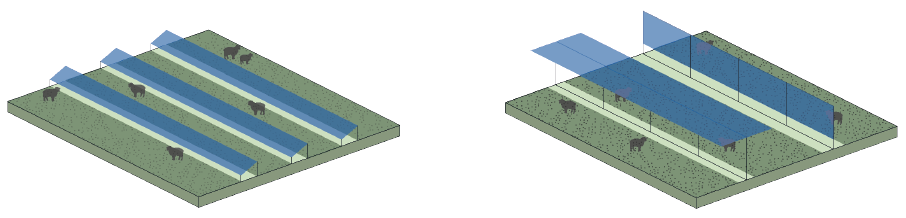
Figure: Three different kinds of interspace agrivoltaics (Biró-Varga, Sirnik & Stremke, 2024)
Forestvoltaics: Master thesis Sam van den Oetelaar (2022)
Afforestation is becoming politically popular to boost biological carbon sequestration to reduce climate change effects. Similarly, the use of solar panels is also getting popular. In densely populated countries such as The Netherlands, multifunctionality of the landscape is a significant factor for spatial quality. This master examines the potential synergies between silviculture and renewable energy production. The research consists of two parts: research for design (RtD) and research through designing (RTD). The RfD process yielded 11 design considerations covering carbon sequestration, forest health, recreation and Forestvoltaics (FV) – a promising function combination between photovoltaic energy production and forest development. The RtD process resulted in a landscape design in which FV systems are integrated in a multifunctional carbon mitigation landscape. The research concluded that FV are suitable for creating synergies. However, the proposed concept is novel and conceptual, and additional studies are required to examine its full potential.
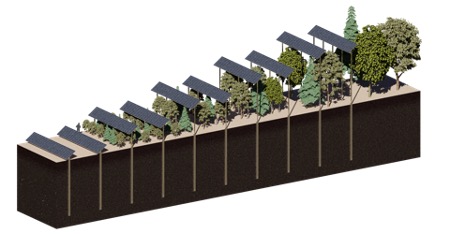
Figure: Visualization of ForestVoltaics concept (Van den Oeterlaar, Stremke & Sirnik, 2022)
Ecosystem services & solar landscapes: Master thesis Tine Lambert (2022)
The urgency of energy transition often leads to solutions that do not relate to the existing landscape, putting ecosystems under pressure. The challenge is to ensure that the implementation of renewable energy does not adversely affect ecosystem services, but instead improves them. This master’s thesis investigated how a multifunctional solar landscape in the municipality of Berg en Dal (NL) can improve spatial quality through the deployment of the ecosystem services concept. First, 16 spatial guidelines were obtained from the literature. Current ecosystem services in the area were analyzed; an integrated map shows the trade-offs, synergies and hotspots between ecosystem services and energy generation. Next, expert surveys were used to assess and value the spatial quality of various function combinations with PV. All findings were incorporated into a design which shows that a multifunctional solar landscape can bring about positive changes for spatial quality. The use of the different methods stimulates designing sustainable projects that connect people, energy, and biodiversity, based on the potential synergies of different ecosystem services.
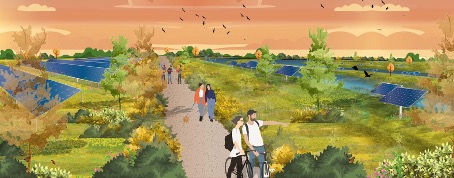 Figure: Visualization of multifunctional solar landscape in Berg en Dal (Lambert, Enserink & Stremke, 2022)
Energy on the Edge: Master thesis Tim Kisner (2022)
Integration of energy transition with other societal goals is slowly becoming a more widespread approach. In recent years, combinations of energy with agriculture, nature and infrastructure have been proposed. The combination of energy and these functions often implies a focus on the open landscape: outside the city, far from where the energy is consumed. To spare these landscapes, opponents often suggest to ‘use every roof’ for solar energy generation. Although it is arguable whether this will satisfy the energy demand of the entire nation, locating energy generation near the user seems tangible and fair. To examine the opportunities of bringing production and consumption together, this master thesis investigated the integration of energy and housing development. An ‘Energy on the Edge’ approach is developed, reaching for integration beyond mere utilizing of roof space. The approach is employed to study synergies between energy and housing development at the western city edge of Nijmegen. Here, electricity production is used to stimulate housing development while coping with future uncertainties regarding both functions. This master thesis establishes a new concept for living with renewable energy: Living in the Power Plant. The concept utilizes renewable energy to improve urban landscape quality – a promising approach to partly substitute conventional, monofunctional energy developments in our rural landscapes.
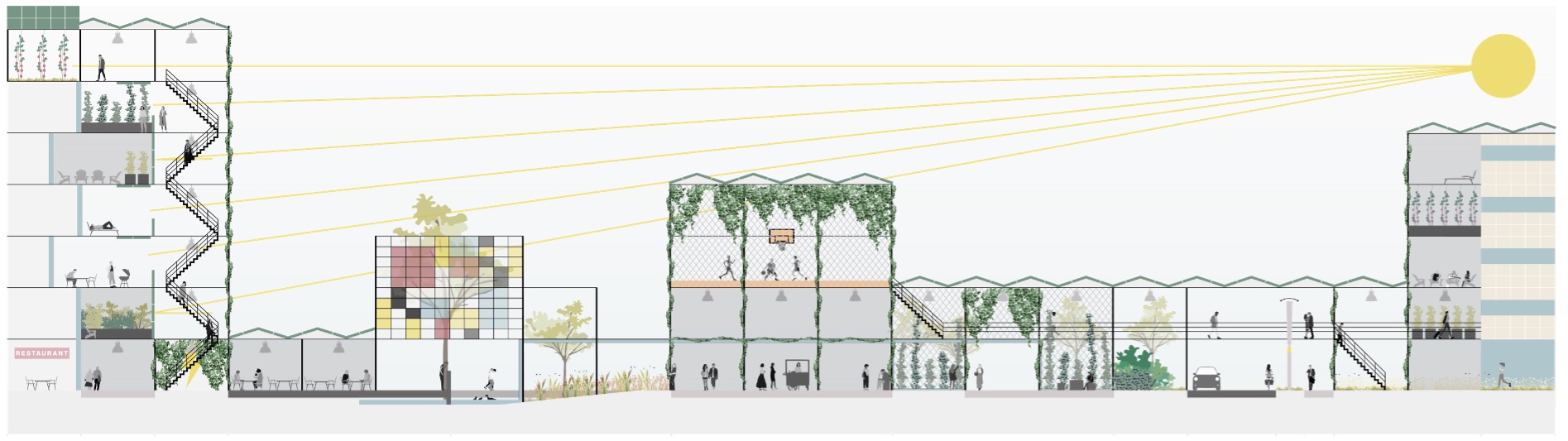 Figure: Cross section ‘Energy on the Edge’ neighborhood in Nijmegen (Kisner, Stremke & Sirnik, 2022)
Empowering energy estates: Master thesis Joost Andrea (2021)
In order to realign and better embed renewable energy in the landscape, inspiration is sought in the country estate (in Dutch: landgoed), as this is an integrative production landscape that unifies agricultural, cultural-historical, recreational, and ecological values. Although a promising concept, design guidelines for specific type of energy landscape are lacking. This Master thesis developed design guidelines for a sustainable energy estate in the landscape context of West Overijssel (NL). It builds upon the existing knowledge of sustainable energy landscape design and the activation of the design knowledge embedded in the historical estates that can be found in this specific region. Through a comparative case study, thirteen spatial characteristics of the specific estate type have been identified. The final design illustrates that it is indeed possible to employ the concept of estate as a means for designing sustainable energy landscapes, and that the (historical) spatial characteristics possess enough flexibility to adjust them to the contemporary program.
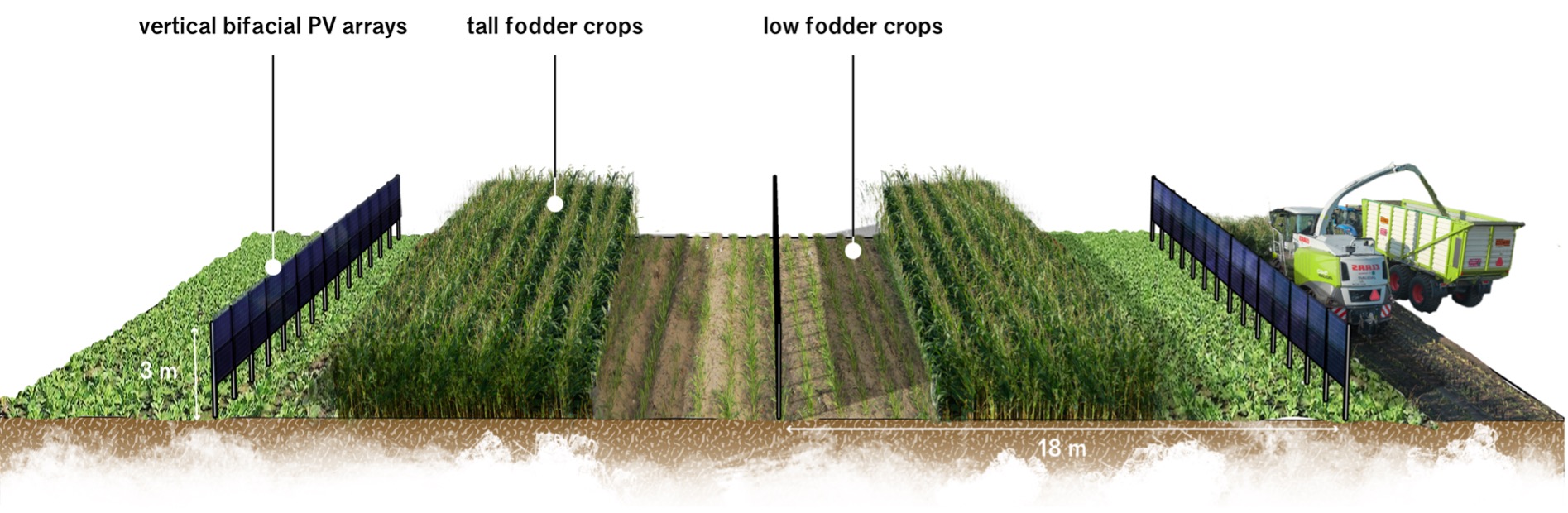 Figure: Schematic section Energy Estate West Overijssel (Andrea, Stremke & Enserink, 2022)
Solarchipelago: Master thesis David de Boer (2020)
Climate change mitigation calls for a transition towards more sustainable energy sources. However, allocating the space for renewable energy technologies like PV systems in complex and dense metropolitan regions is no easy task. This is also the case for the IJmeer region between Amsterdam and Almere. Moreover, the IJmeer is an ecosystem under pressure. The objective of this Master thesis was to design an energy transition in the IJmeer that embraces the way ecosystems develop, for example through succession. Research through designing (RtD) was used to define design principles and guidelines. The design for the IJmeer was created using a modular approach. Two modules are presented that combine both renewable energy generation as well providing an infrastructure for succession to occur. Multiple stages of succession simultaneously present in these modules allow for more habitat diversity for flora and fauna. The modules performance is based on constant working principles but include variables as well to provide different system responses. The modules can adapt to the characteristics of multiple areas within the IJmeer, while also supporting other metropolitan functions like infrastructure and urban.
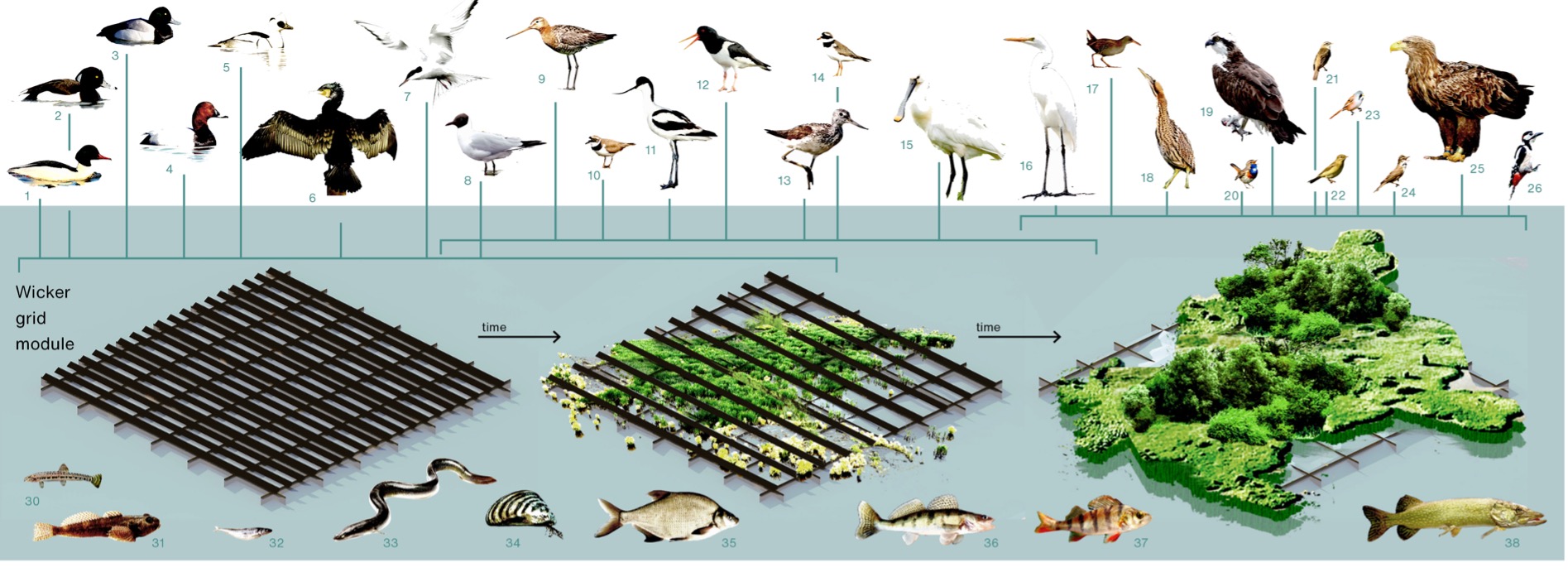 Figure: Co-evolution energy development & natural succession through time (De Boer, Stremke & Picchi, 2020)
Not just another solar field: Master thesis Florian Becker (2020)
By 2030, the regional energy strategy (RES) of the U16 region around Utrecht (NL) demands 3.6TWh of renewable electricity. In more concrete terms, this means a surface of 3,600 hectares of solar fields that are arising in the landscape within the next years. Though this goal might not be realistic, even the appearing of a single hectare of solar field in the landscape should not go without careful planning anymore. Plenty of research has demonstrated that solar fields can host many additional functions without decreasing their productivity. Especially in densely populated regions like the U16, scarce surfaces can no longer be allocated to single functions. This master thesis builds upon existing knowledge on multifunctional solar fields to identify a set of design guidelines. These are combined with guidelines of garden design to inform the recent concept of EnergyGardens. After articulating a comprehensive set of design guidelines, a selection is tested in a design for an EnergyGarden in Mastwijk. The EnergyGarden Mastwijk is a real-world project, which is currently developed and planned to be implemented in 2022.
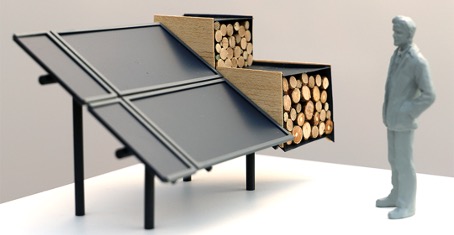 Figure: Scale model of human-scale PV array with insect hotel (Becker, Stremke & Enserink, 2020)
Lecture series ‘energy landscapes’ at Amsterdam Academy of Architecture (2020)
In Spring 2020, the High Density Energy Landscapes Research Group at the Amsterdam Academy of Architecture hosted a lectures series on energy landscapes. Each evening two speakers were invited, one from the academia and one from the design community. The first lecturer brought ‘facts’ and ‘theory’ to the students, the second translated this knowledge in real-world design projects. Invited speakers were Elizabeth Monoian and Robert Ferry (both LAGI: Land Art Generator Initiaive), Dan van der Horst (University of Edinburgh), Klaas Jan Wardenaar (SmartLAND), Dirk Sijmons (H+N+S), Dirk Oudes, Hester Koelman and Lieke de Jong (all Amsterdam Academy of Architecture), Alessandra Scognamiglio (ENEA, Italy) and Ingrid Luijkx (Wageningen University). This ‘energy landscape’ lecture series was a part of the ‘Theory, Society and Design’ course (C4/C6) curated jointly by the three research groups of the Academy.
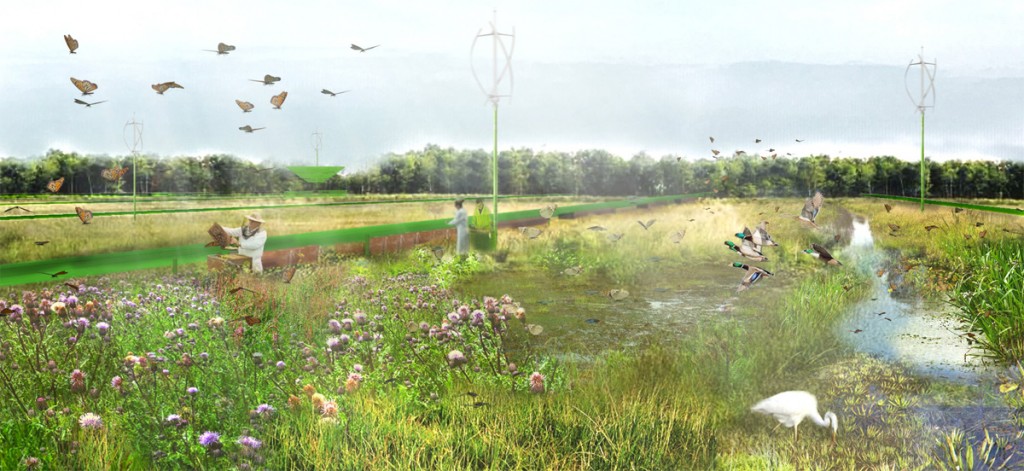
Figure: Artist impression of energy landscape in the Lopikerwaard (NL) Lieke de Jong, 2019 (AvB).
Designing with Energy: Lecture series at Amsterdam Academy of Architecture (2017)
There is mounting evidence that the assimilation, conversion, storage, and transport of renewable energy will give rise to the most pivotal land use changes of the twenty-first century. Landscape architects, architects, urban planner and other environmental designers play a critical role in this socio-technical transition that affect both the built and natural environment. This lecture series covered fundamental design concepts, explorative design proposals as well as experiences from practice – all of which can inform design-inquiry towards a low carbon future. The notion of energy transition was explored from a spatial perspective while critically discussing policies, governance and the (potential) role of environmental designers. This dedicated lecture series was hosted by the Amsterdam Academy of Architecture between 8th of February and 22nd of March 2017 as part of the C4/C6 course on theory, society and design. List of speakers: Sven Stremke (WUR, NRGlab, AMS institute); Dirk Sijmons (TU Delft, H+N+S); Andy van den Dobbelsteen (TU Delft, AMS institute); Boris Hocks (POSAD, Den Haag); Sören Schöbel (TU Munich, Germany); Jannemarie de Jonge (Wing, Wageningen); Elizabeth Monoian & Robert Ferry (Land Art Generator Initiative, Pittsburgh, USA).
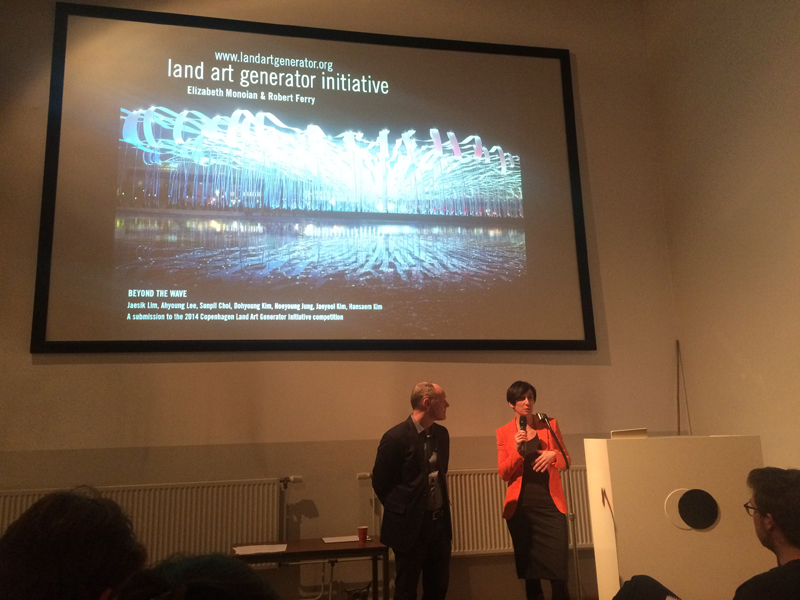
Figure: Elizabeth Monoian and Robert Ferry from LAGI presenting at the Amsterdam Academy of Architecture.
Designing for climate action in the North Sea: Master thesis Changsoon Choi (2016)
Currently, adaptation and mitigation are considered two different means to address climate change and, consequently, dealt with separately in policy and practice. In this MSc thesis, an alternative strategy has been explored: a synergetic approach to integrated climate actions. In order to safeguard the Dutch coast from sea-level rise, and to provide renewable electricity, a set of islands has been proposed: the Blue Heart. The design combines climate adaptation and mitigation while carefully considering marine ecology. Being located 20 kilometers off the coast, the main island accommodates a wide range of functions including aquaculture, algae farming, and leisure opportunities, while serving as a stepping-stone in the offshore ecological network. A set of submerged breakwater structures can help to prevent coastal erosion of the main island. The realization of this design proposal can become cost-efficient by making use of decommissioned oil/gas platforms in the North Sea. This way, the artifacts of the offshore fossil fuel energy seascape become the catalyst for an alternative and more sustainable low-carbon future.
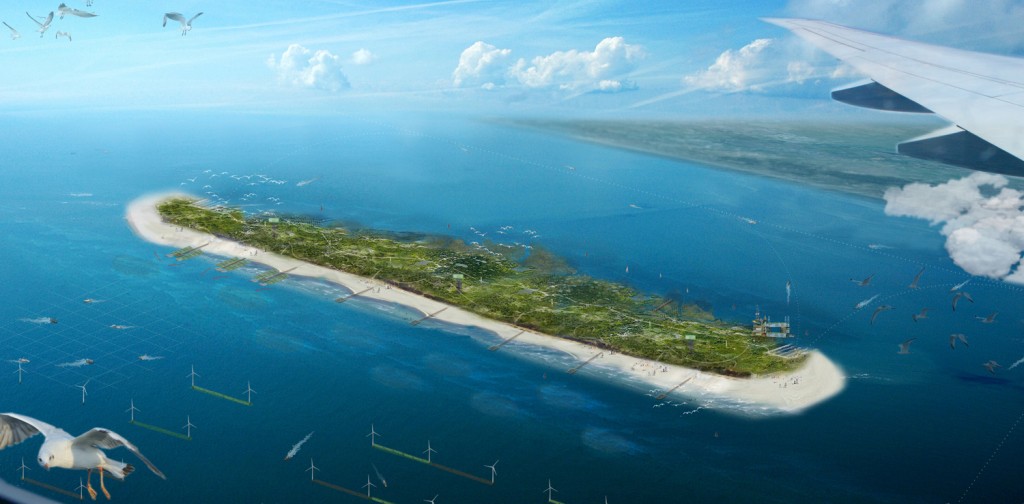
Figure: The ‘Blue Heart’ main island, breakwater structures and offshore wind park seen from an airplane approaching Amsterdam (C.Choi, 2016).
Recycling energy landscapes in Groningen: Master thesis Vincent Peters (2016)
Since the discovery of large gas fields in 1950’s, the Netherlands are highly dependent on natural gas as energy source. Because of problems connected to the extraction and the use of natural gas (e.g. earthquakes, soil subsidence and climate change), a transition towards renewable energy sources is needed. Often, such transitions result in disrupted and abandoned landscapes. In order to explore alternative futures for the North of the Netherlands, the notion of ‘recycling energy landscapes’ was examined in this Master thesis project. To understand the life cycle and perception of landscapes dominated by natural gas extraction, a content analysis of Dutch newspapers was conducted as part of the research. At a regional design scale, each of the three existing landscape types gives rise to a number of unique propositions. At the local design scale – an extraction site – regenerative and cultural historic principles were applied. This project reveals how selected artefacts as well as materials of the natural gas landscape can be recycled both in a physical and cultural historical way.
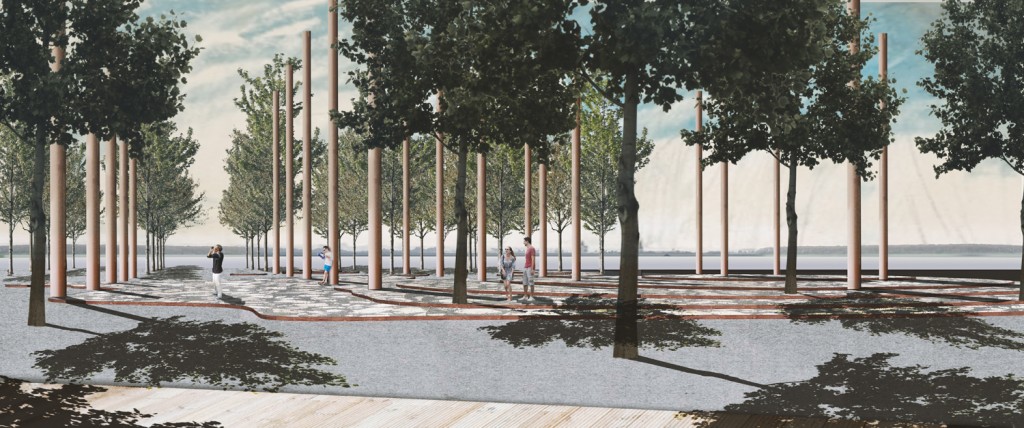
Figure: Monument plaza revealing the soil subsidence caused by extraction of natural gas (V.Peters, 2016).
Shaping solar energy for Zeeburgereiland: Master thesis Tom van Heeswijk (2016)
Local oppositions to wind turbines and solar parks are often related to visual impact and hampers renewable energy developments. In his Master thesis, Tom van Heeswijk examined which factors influence the perception of renewable energy in general and the perception of four Dutch solar energy projects in particular. Two solar parks and two freestanding solar installations were studied by means of empirical research. Statistical analyses revealed a number of response patterns with regard to the perception of these technologies. The findings were then used to inform a number of energy-conscious design principles for solar energy in the public domain. This way public preference can be accounted for. The principles were tested on the Zeeburgereiland in Amsterdam, a new neighbourhood that ought to be energy neutral. The project shows that renewable energy can be designed as inherent part of the urban fabric while improving aesthetic values.
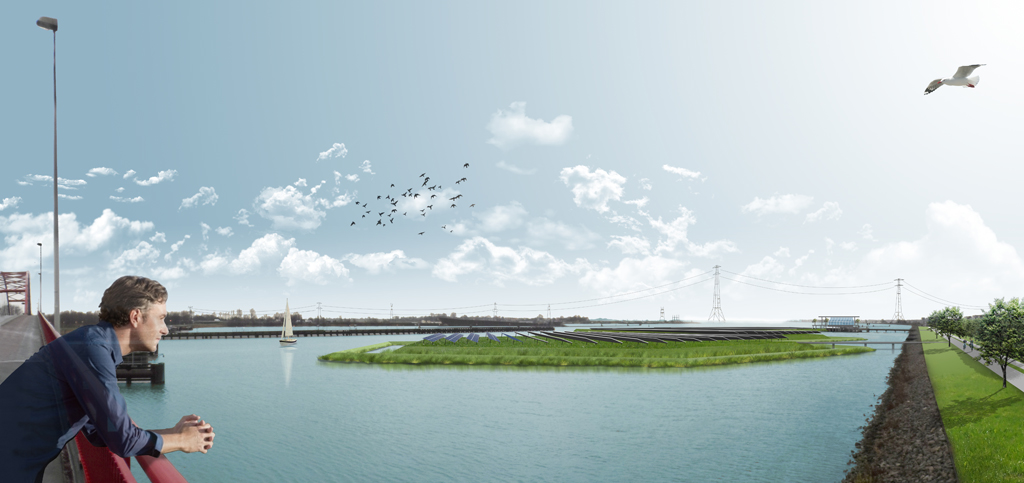 Figure: View across the Buiten-IJ with new solar island (T.van Heeswijk, 2016).
Farming the Sun: Master thesis Fan Yang (2014)
In the era of renewable energy, the involvement of the landscape architect is needed in order to achieve a sustainable transformation of the environment. Research through design has the capacity to reveal how to fit new technologies into the landscapes. Photovoltaic panels (PV) is one of these new technologies. PV is a booming industry with an average yearly growth of 14% worldwide. Due to its contribution to renewable energy supply and mitigation of climate change, the province of North-Brabant is willing to support the development of solar parks. The color, material and the shape of solar panels, however, complicate the integration in the surrounding landscapes. Moreover, their occupation of large pieces of land may cause conflicts with other land uses. That is why the following questions were studied in this thesis project: Where are the suitable locations for solar parks in the province, and how to integrate solar parks in a selection of regional landscape?
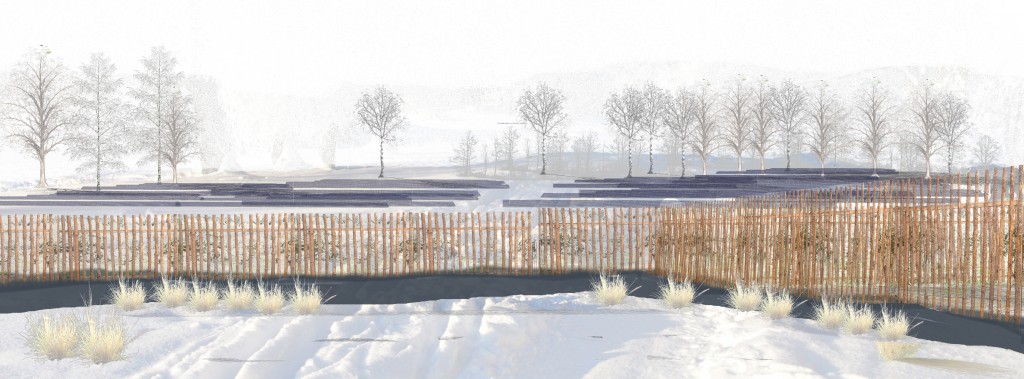 Figure: Winter impression of the proposal for the Reutsche Loop solar park (F.Yang, 2014).
Infrastructure Energy Pulse: Master thesis Roxana Florescu & Lucia Pro (2013)
The issue of energy transition is commonly considered a problem to be faced in a quick and efficient manner. In their thesis, Roxana and Lucia took the challenge to reverse this position, investigating renewable energy sources and associated technologies as solutions for a bright future. The focus of their thesis was on how renewable energy can become a cornerstone of a complex transformation strategy for the development of sensitive landscape, embracing economy, society and nature. Conducting research and design at the regional, urban and site scale, they illustrate how it is possible (and recommendable) to utilize the hidden potential of renewable energy transition for (re)vitalising and (re)identifying landscapes in an old mining region that connects Belgium, the Netherlands and Germany. Infrastructure Energy Pulse represents one of the key projects of the KWh/m2 studio (TU Delft and Wageningen UR) where environmental design students and scholars explored energy transition in the larger built environment.
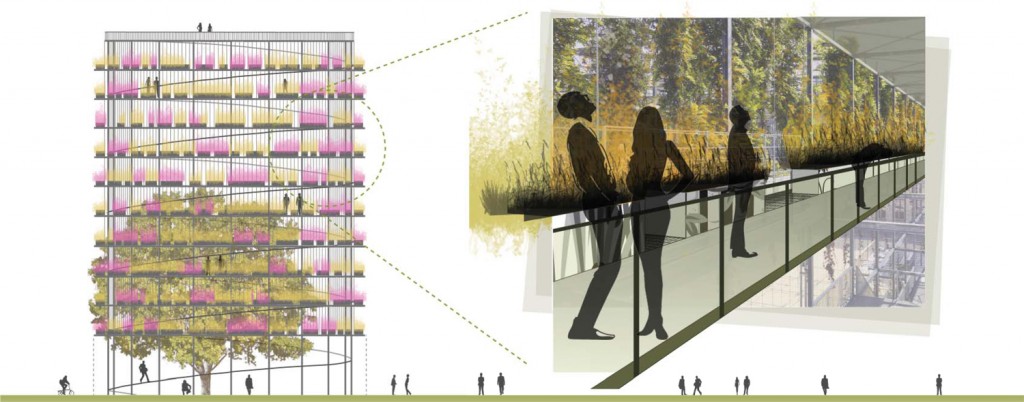 Figure: Energy landmark Spekholzerheide, Parkstad Limburg (R.Florescu & L.Pro, 2013).
Energy and landscape experience: Master thesis Stijn Tijhuis (2013)
In his Master thesis Stijn explored the use of narrative inquiry and energy engaging design concepts for the shaping of sustainable energy landscapes. He studied how to enrich the meaning of energy landscapes by designing specific landscape experiences. The municipality of Zwijndrecht presented the site for this research and design project. Two alternative design proposals were developed and discussed with stakeholders to evaluate the usefulness of designing landscape experiences based upon (a) people’s narratives and (b) energy engaging design concepts. Based upon a stakeholder workshop and a number of interviews, a place specific and attractive energy landscape has be designed for the municipality of Zwijndrecht.
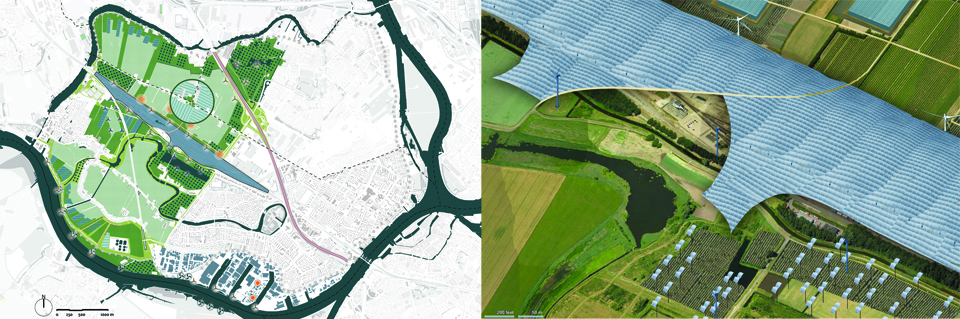 Figure: Energy vision for Zwijndrecht (left) and visualization of PV park above railroad (right) (S.Tijhuis, 2013).
Dissipative City Rotterdam: Master thesis Darius Reznek (2012)
In Dissipative City, Darius studied how exergetic optimization of energy and matter cycles can create an attractive urban structure that can provide ecosystem services and support human life. He does this on building block and district scale. For the latter, he designed the ‘urban incubator’, reinventing Buckminster Fuller’s dome with energy transition in mind. Both the membrane and the urban incubator can help the city of Rotterdam to cope with of future energy depletion, climate change and population increase.
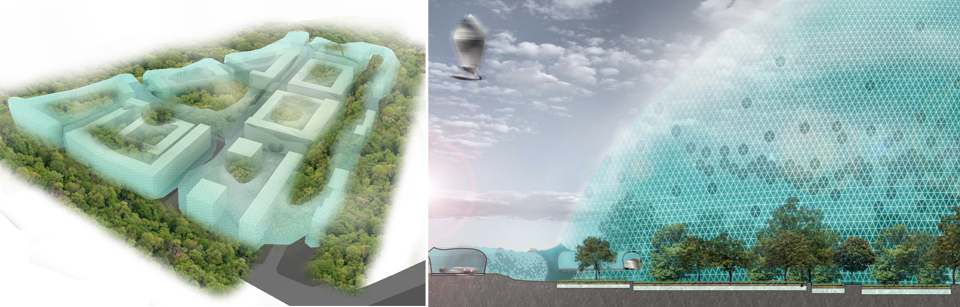 Figure: Climate membrane existing city bloks (left) and Urban Incubator (right) (D.Reznek, 2012).
A Sustainable Landscape for Arnhem: Master thesis Taícia Marques and Jaime Gomez de la Fuente (2012)
Taícia and Jaime studied how the city of Arnhem (NL) could become CO2 neutral. In their “Less is Better” and “Business as Usual” visions, they explored how Arnhem will look like when energy transition is considered, and how energy-conscious interventions will contribute to CO2 neutrality in the city. The four most important principles are (1) Reducing the consumption of energy by saving, (2) Focusing on measns to store and exchange energy, (3) Generating the most energy by renewable sources, (4) Using high-exergy sources for high-grade processes. By means of robustness analysis, Taícia and Jaime formulated recommendations for the municipality to start their way to CO2 neutrality.
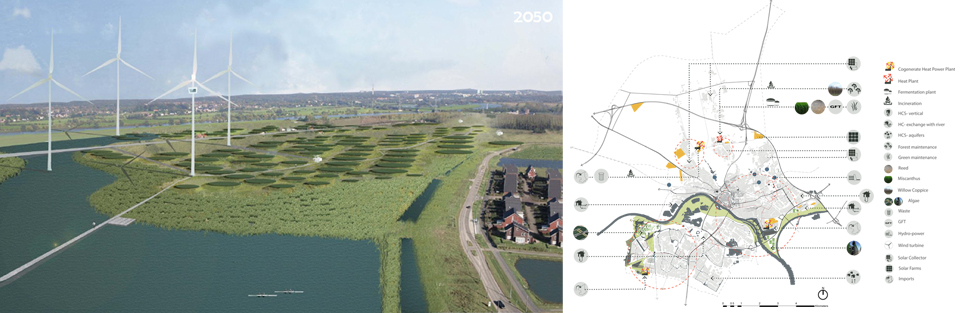 Figure: Algae park Schuytgraaf and “Less is Better” energy vision Arnhem (J.Gomez & T.Marques, 2012).
Hidden Power Veenkoloniën 3.0: Master thesis Tim Snippert (2011)
In his final MSc thesis, Tim searched the hidden potentials of the Veenkoloniën to become an energy, water and food independent region again. By applying a system approach, he reveals how the Veenkoloniën could be transformed into a source of renewable energy and various products. His proposal is based on the thorough analysis of energy potentials, physical landscape, water system, regional identity, social situation, real estate development and the potential for establishing a biobased economy. This thesis was submitted to the Eo Wijers regional design competition, where Tim won one of two young talent awards.
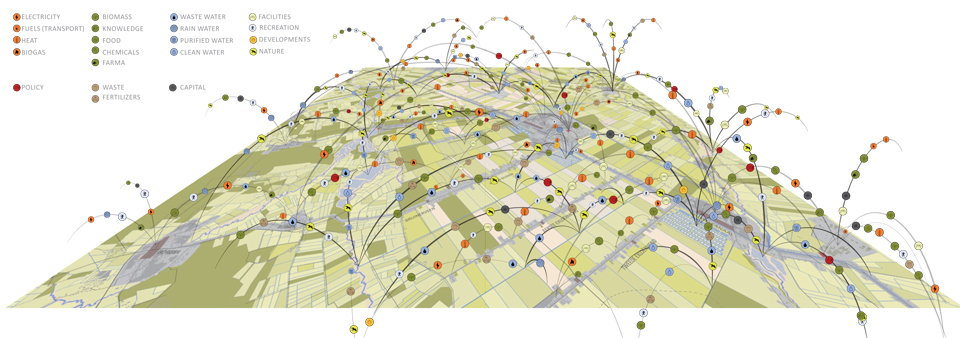 Figure: System approach to landscape design: Proposed energy, material and water flows (T.Snippert, 2011).
Sustainable Energy Islands: Master Studio 2011
In 2011, the municipalities of Schouwen-Duiveland and Goeree-Overflakkee (two islands in the provinces of South Holland and Zeeland) commissioned students of Landscape Architecture, Planning and Cultural Geography to develop ideas for sustainable energy islands. Goeree-Overflakkee was supported in this by the ‘Mooi Nederland’ program of the Ministry of Infrastructure and the Environment. From March to June 2011, 60 students worked both in teams and individually on developing visions for self-sufficient, sustainable energy futures for the islands, while taking into account both landscape quality and its perception and valuation by the islands’ inhabitants and visitors. They conducted research on a wide range of aspects related to the assignment, made plans for an energy transition and designed sustainable energy landscapes.
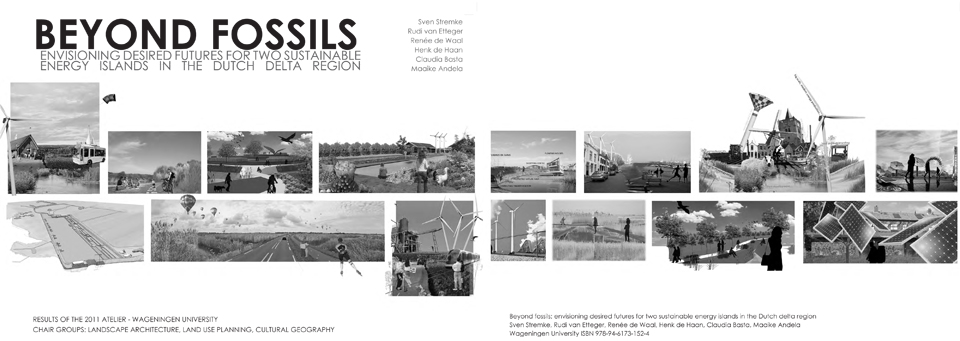 Figure: In the ‘Beyond Fossils’ book, we present all group projects and a selection of individual students projects from the 2011 Studio. Download PDF here.
