Research

Since the future of a sustainable post-carbon system lies in the use of space – space needed for the generation of renewable energy and sequestration of carbon emissions – our approach to landscapes is decisive. The key research question addressed at TwentyOneLandscapes is how to design, plan, and develop sustainable landscapes. One of the main objectives is to facilitate knowledge exchange and discussion between the various disciplines and domains dealing with decarbonization. Many issues are being studied concurrently but independently from one another. Other questions that deserve particular attention have escaped national and institutional research agendas.
Core research interests TwentyOneLandscapes: Concepts and design principles; planning and design methods; evolution of post-carbon landscapes; urban metabolism; modelling and mapping of landscapes.
PhD research Magdalena Grienig: Systemic regional designing in the Anthropocene (2025-2030)
This PhD research investigates the theoretical and methodological enhancement of regional designing to develop long-term, desirable futures that are adequate to address the complex and interrelated challenges posed by the Anthropocene. The immense impact that humans have on the planets interconnected systems in the Anthropocene, means that there is an urgent need for deep transformation processes to address complex challenges, such as climate change and biodiversity loss. But how can we imagine and plan sustainable futures when the path forward is uncertain? The PhD reserach of Magdalena Grienig is co-supervised by Sven Stremke and Ilse Voskamp of the Landscape Architecture Chair Group, WUR. More information can be found here. Contact: Magdalena Grienig (WUR).
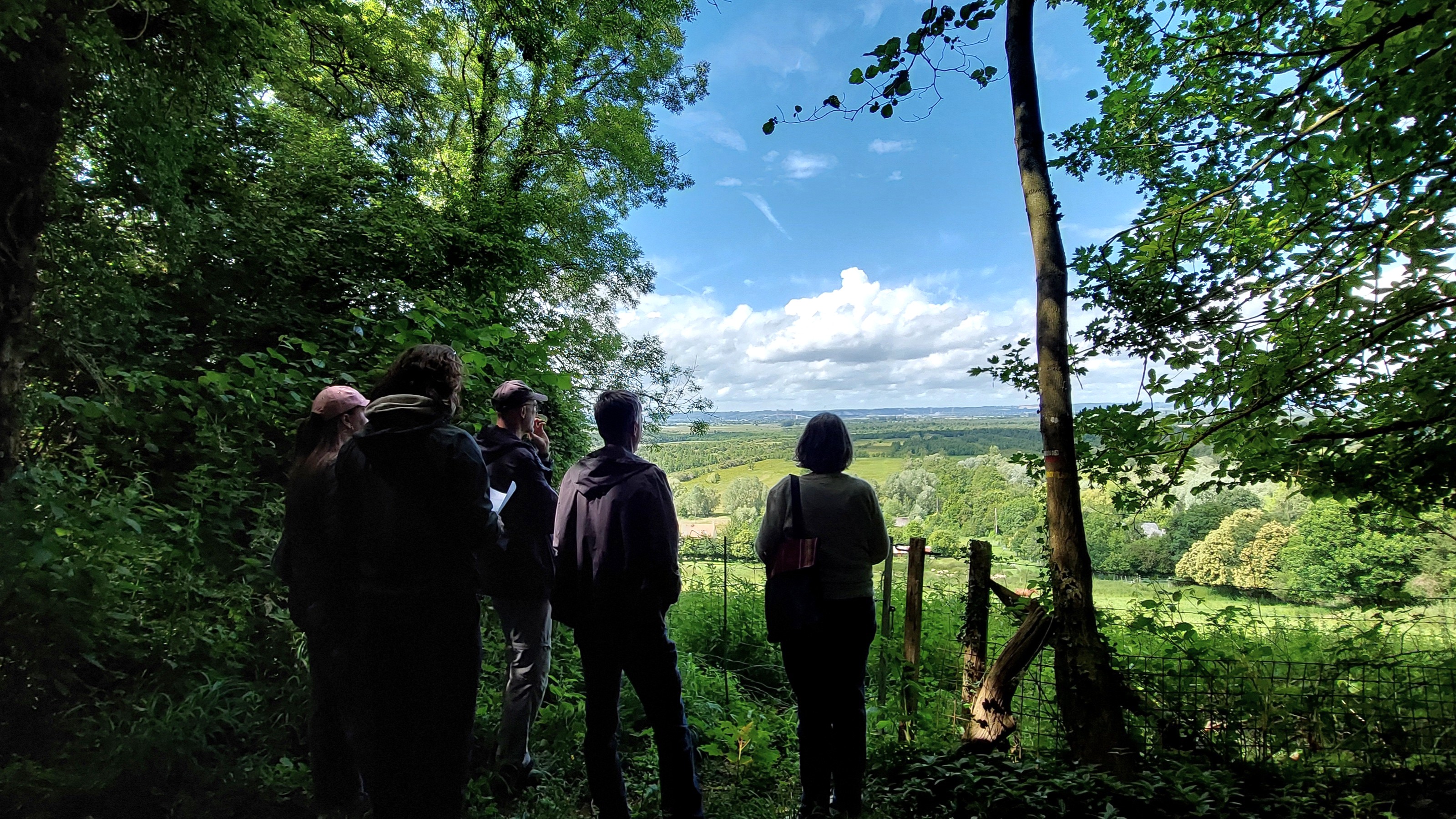
GAZO: Solar Power Plants with Spatial Quality in Gelderland (2022-2027)
Space is scarce in The Netherlands. That is why the province of Gelderland wants to encourage multifunctional use of space, in line with national government policies. Several examples of multifunctional solar fields exist in the Netherlands but more examples are needed with attention to landscape and nature, use of knowledge from the environment and involvement of local residents. In the GAZO project, the province of Gelderland and Wageningen University & Research join forces to collaborate with stakeholders from a maximum of six solar power plants, from start to finish, preferably one in each of the six energy regions of the province. The scientists will help conceptualizing, designing and developing solar fields that combine different functions and improve the quality of the larger environment. The team consists of experienced researchers and PhD students from different research groups. Contact: Jeroen Sluijsmans (WR/WEnR) and Sven Stremke (WU/LAR).
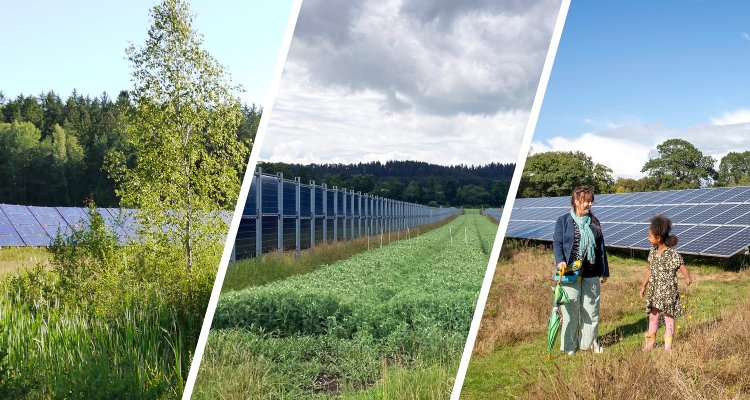
WACAPV: Wageningen Approach for Circulair AgriPhotoVoltaics (2021)
Agriphotovoltaics (APV) is a promising technology in which solar energy generation is combined with food production. First experiments show that many crops grow well underneath elevated PV panels, due to reduced evaporation and moderate microclimate. Existing research does not yet focus on the potential use of APV to advance the transition towards more circular agriculture, while considering the experience and other relevant values of landscape users. Wageningen researchers have the ambition to contribute, but currently miss a clear research agenda – a ‘Wageningen Approach’ for APV research on perspective synergies between topics such as sustainable agriculture, spatial quality, soil quality, biodiversity, and the meso/micro-climate. WACAPV will start a dialogue on circular APV. Results will be presented at conferences and in a review paper. Contact: Jeroen Sluijsmans (WEnR, projectleader), Igor Sirnik and Sven Stremke (WU/LAR).
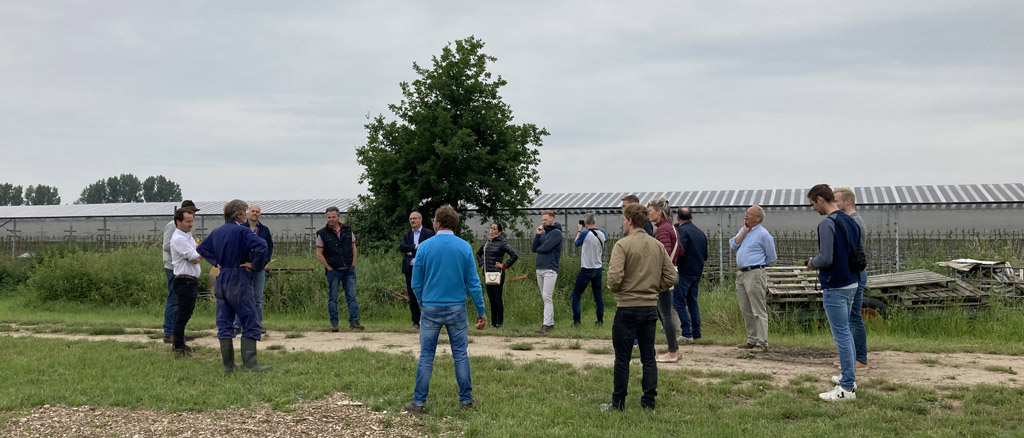
Research project: In My Backyard Please (2019-2021)
In collaboration with TNO-ECN, DIG and TS Visuals, the NRGlab/Wageningen University performs a design research on how to design and develop affordable ground-based PV parks that are socially accepted and desired. This TKI funded project will be performed in a real-life setting in Nauerna (NL) where local stakeholders are willing to participate in a co-creation process to design a sustainable PV park. The project will deliver multiple designs of landscape integrated PV parks featuring multiple land uses and in-depth knowledge about stakeholder involvement. In addition, a novel research tool will be developed that allows for location specific predictions of park bound biodiversity development in advance of commercial park development. The NRGlab contact person for this project is Merel Enserink. More information on this project can be found here.
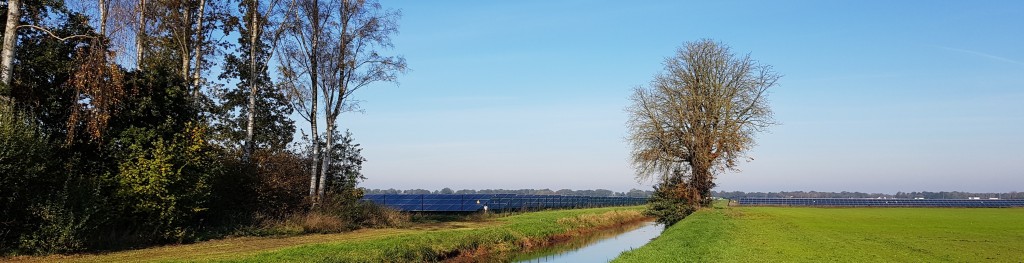
Best-practice European Photovoltaic Parks: Comparative case study (2019-2020)
The objective of this research is to create an overview of the best-practice designed solar parks in Europe and identify the used spatial strategies. Our focus is on ground-mounted solar parks where besides electricity generation, other functions and/or values are incorporated in the design, such as biodiversity, leisure, aesthetics etc. We aim to derive knowledge that will aid the future design of high-quality solar parks. This research is conducted in collaboration between the HDEL research group at the Amsterdam Academy of Architecture and the Landscape Architecture group of Wageningen University. Contact person: Dirk Oudes
National Climate Agreement: Spatial research for Dutch Climate Agreement (2018)
Sven and Dirk, together with other spatial researchers participated in the meetings for the National Climate Agreement and advised negotiators on questions with potential relevance for urban and rural landscapes. Together, we managed to put landscape quality on the agenda (in Dutch ruimtelijke kwaliteit) and raise awareness for the concept of energy landscape: observable landscapes that originate directly from the human development of energy resources (Pasqualetti & Stremke, 2018). The physical consequences of implementing energy transition in The Netherlands and beyond may vary from small-scale local interventions to larger and more dedicated, so-called entity energy landscapes. The preliminary results – the Concept Climate Agreement – can be accessed here (in Dutch only).
Commissioners: Ministries of Economic Affairs & Climate, Internal Affairs, Infrastructure & Water
Partners: NRGlab, HNS, Generation Energy, FABRICations, StudioMarcoVermeulen, Cloud Collective & APPM
Spatial Research Energy and Climate: The Dutch Energy Transition (2017-2018)
The Spatial Research Energy and Climate project (in Dutch Ruimtelijke Verkenning Energie en Klimaat) was commissioned to prepare the negotiations for the National Climate Agreement in early 2018. During the project, the researchers from the National Perspective Energy & Space team advanced their spatial studies with particular focus on the six so-called functionalities: Energy savings, high temperature heat, electricity, low temperature heat, transport & mobility, food and nature. The NRGlab contributed to overall project and was in the lead for the spatial research on high temperature heat. The findings of the project have been published in the book ‘Ruimtelijke Verkenning Energie en Klimaat’. The PDF of the book (in Dutch) can be accessed here.
Commissioners: Ministries of Economic Affairs & Climate, Internal Affairs, Infrastructure & Water
Partners: NRGlab, HNS, Generation Energy, FABRICations, StudioMarcoVermeulen and Ruimtevolk

Exploring Alternative Futures for Entity Energy Landscapes: PhD study Dirk Oudes (2017-2021)
The aim of this PhD research is to develop an environmental design framework for landscapes with renewable energy generation as primary function, here referred to as ‘entity energy landscapes’. Entity energy landscapes are characterized by a vast spatial expanse and visual dominance of energy technologies. They consist of a single or multiple types of technologies such as wind turbines, solar panels, biomass facilities, energy transport and storage facilities. Entity energy landscapes are needed in order to achieve the renewable energy targets set in the Paris Agreement along with other smaller-scale and local energy landscapes (Sijmons et al. 2017). The great majority of current energy landscapes in the Netherlands belong to the latter category of ‘component energy landscapes’ where energy technologies represent one of the many layers in the landscape (Pasqualetti & Stremke, 2018). Read more.
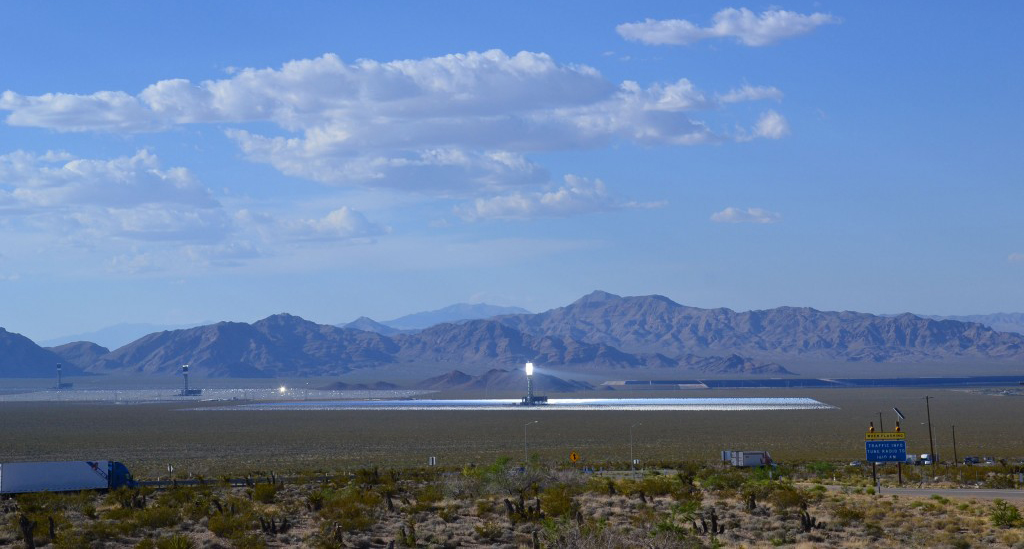
Renewable energy landscape: concentrated solar power in Ivanpah, USA. Source: Sven Stremke
History of Dutch Energy Landscapes (2016-2019)
The notion of ‘energy landscape’ receives more and more attention in both design practice and academia. But what exactly is an energy landscape? Can we identify different types of energy landscapes? How have they evolved through time, and what does this mean for designing and planning landscapes for renewable energies? Are we creating (or should we create) new cultural landscapes? By analysing what is already written on the topic of energy landscapes, insight upon its definition, its existence and its history is gained. This research project, which is commissioned by the Dutch Cultural Heritage Agency (RCE), aims to examine the notion of ‘energy landscape’ and other closely related terms. It intends to unravel the history of Dutch energy landscapes with a focus on the spatial dimension of past energy transitions. The results of the research that is being conducted by Jolanda de Jong and Sven Stremke will be presented in a scientific peer-reviewed article.
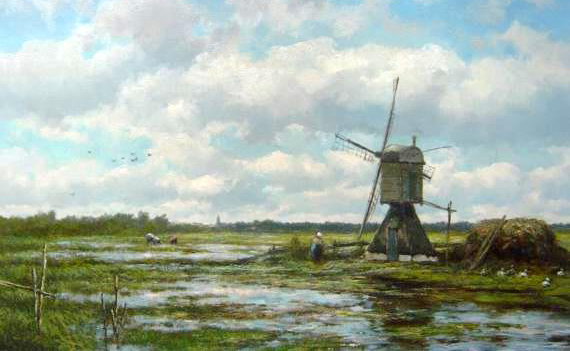
Figure: Landscape with wind mill near Vreeland by J.H.B. Koekkoek
The Territorial, Multi-Actor & Local dimensions of Energy Transition: PhD study A.van Noordt (2016-22)
The aim of this PhD research is to gain insights in the way local energy actions initiated by various actors can contribute towards an energy transition. A spatial-relational approach is employed to investigate the territoriality of current projects and to formulate the possibilities of spatial policy to guide, facilitate, support and manage the operationalization of ambitious local energy- and climate visions. Within this PhD research, theories from Transition Management are combined with a relational, multi-actor framework. Territorial factors within the energy transition will be identified and examined for six cases. Within each of the three large actor groups – public sector, private sector and civil society – two Flemish cases will be selected for in-depth analysis. The conclusions will focus on how spatial policy can guide, facilitate, support and manage the operationalization of ambitious local energy- and climate visions. Read more.
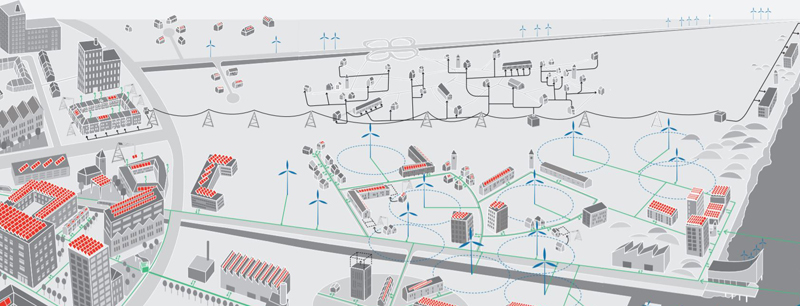
Figure: The spatial challenges of the energy transition (Credits: Architecture Workroom Brussels et al. 2017).
Urban Water & Energy flows for design of Green/Blue Infrastructure: PhD study Ilse Voskamp (2015-20)
The PhD research of Ilse Voskamp builds upon the AMS Urban Pulse and is co-supervised by Sven Stremke of the Landscape Architecture Chair Group, Wageningen UR. The other supervisors involved are Jan Vreeburg and Huub Rijnaarts (promotor) of the sub-department of Environmental Technology, Wageningen UR. In this PhD research, a model will be developed that can provide insight in a cities resource flows, to inform resource efficient design of our cities. In order to plan and design resource efficient cities, a sound understanding of urban resource flows is essential (Voskamp et al., 2016). One of the approaches used to analyse resource flows in cities is urban metabolism. Urban metabolism refers to the exchange processes whereby cities transform raw materials, energy, and water into the built environment, human biomass, and waste (Decker et al., 2000). It is argued that urban metabolism analyses can contribute to sustainable urban planning and design, but thus far this application remains limited (Kennedy et al., 2011). Read more.
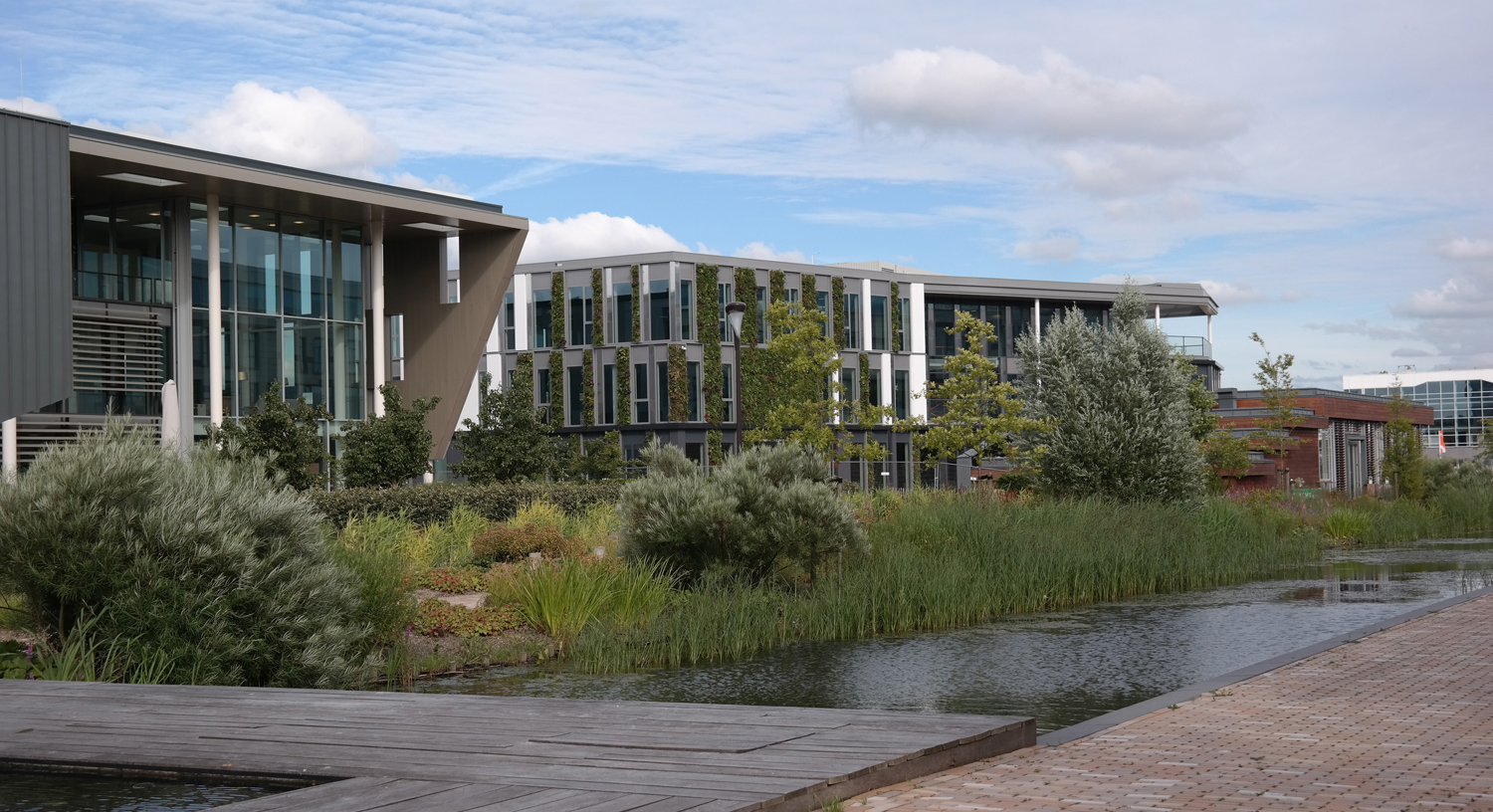 Figure: Green-blue infrastructure at the Park 20|20 in Hoofddorp, The Netherlands (Voskamp, 2016).
Application of energy conscious design principles in the planning and design of sustainable energy landscapes: PhD study Roberta Pistoni (2015-19)
This PhD research aims to examine the relations between energy conscious design and landscape design and to understand which principles and strategies are currently applied in planning and design practice. The skills and roles of landscape architecture (as discipline) and landscape design (as activity) are also investigated. The research considers France and the Netherlands as case studies; nations that have in their political agenda strategies in order to transit from fossil fuels towards renewable and carbon-free sources. Furthermore, the two nations have an important and long lasting tradition in landscape architecture, but with different roles and involvement in energy transition processes. Read more.
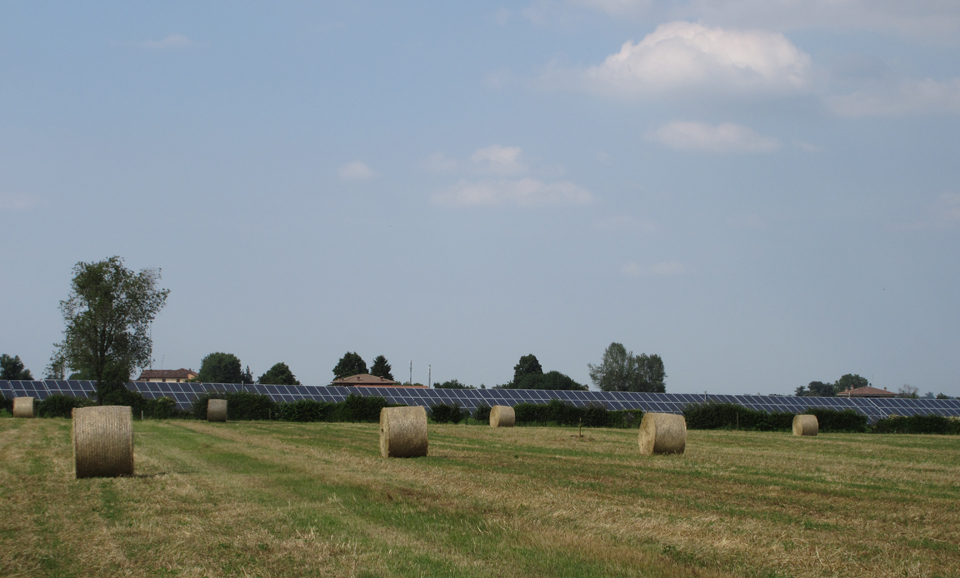
Figure: Renewable Energy Landscape in the Po Valley, Italy (Pistoni, 2016).
URBAN PULSE: Understanding the dynamics of resource flows in Amsterdam (2014-2015)
To reduce the environmental impact of cities and to safeguard access to energy, water, food and raw materials, a transition towards a circular urban metabolism is advocated by researchers and governments worldwide. The aim of the URBAN PULSE project is to inform this transition by understanding spatial and temporal dynamics of resource flows in the city of Amsterdam: the pulse of the city. Read more.
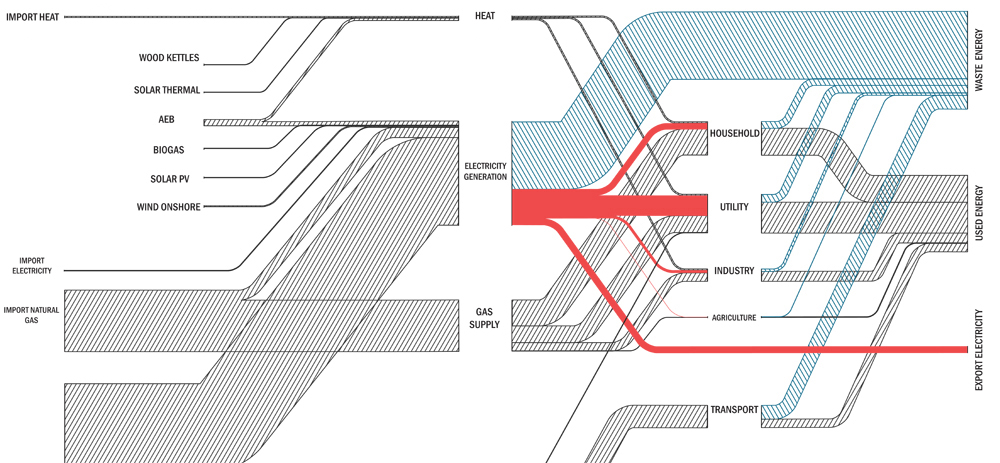
Figure: Preliminary SANKEY diagram of the Amsterdam energy system (Van Heeswijk and Choi, 2015).
PALET: Parkstad Limburg Energie Transitie (2013-2015)
The city region of Parkstad Limburg in the South of The Netherlands commissioned this project in order to instigate the transformation from a region relying almost entirely on fossil fuels to renewable energy sources. The PArkstad Limburg Energy Transition (PALET) project integrates two research tracks: the analysis of potentials for energy savings performed by NEBER/Zuyd Hogeschool and the analysis of potentials for renewable energy generation performed by the NRGlab/Wageningen University. The office of H+N+S Landscape Architects facilitated the integration of the research and the dissemination of the results. Read more
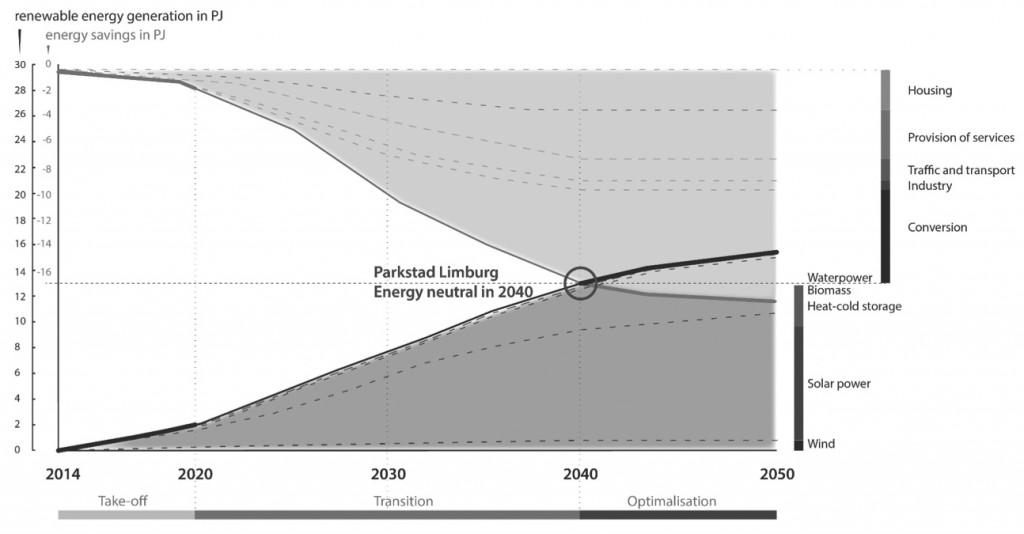 Figure: Energy savings and renewable energy potentials in the Parkstad Limburg region (Delheij et al. 2014).
ZonB: Solar Fields in Noord-Brabant (2014)
In July 2014, the NRGlab finalized and presented the ZonB research project to the Province of Noord-Brabant. The Province had asked us to develop a spatial framework to inform the development of large PV parks (or solar field). In this project, the spatial integration of solar fields was tested and discussed for four different landscape types in Noord-Brabant. The research was structured along three principal questions: WHAT? WHERE? and HOW? A synthesis of the project report can be found here.
Bergstra, E.; Stremke, S. (2014) Spatial Framework to Inform the Development of Photovoltaic Parks. In Photovoltaics, Forms and Landscapes, edited by A.Scagnamiglio, pp. 63–74. European Commission: Brussels.
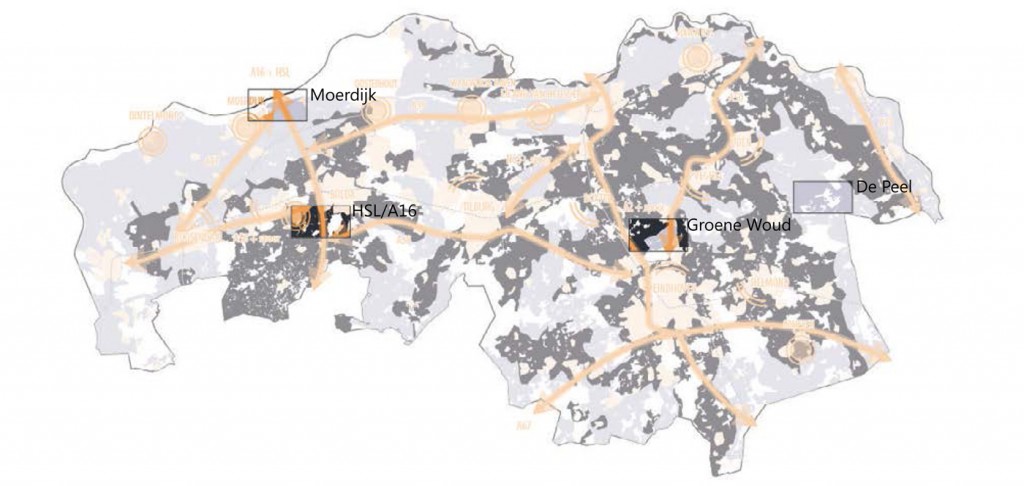 Figure: Map of the province of Noord-Brabant with major infrastructure and selected landscape types ZonB.
Interview series Dutch Landscape Architects and Energy Landscape Design (2013)
In May and June 2013, Silvia Minichino and Renée de Waal organise a series of interviews with Dutch landscape architects working on planning and design of sustainable energy landscapes. The landscape architects are not only asked to talk about their work but also to draw their answers. Silvia will use the results of this inquiry in a comparative study between the Netherlands and Italy. Renée will use the results to position the evaluation of Dutch regional planning and design proposals for sustainable energy landscapes in the Eo Wijers contest in a broader context.
Landscape and renewable energy: PhD study Silvia Minichino (2011-2014)
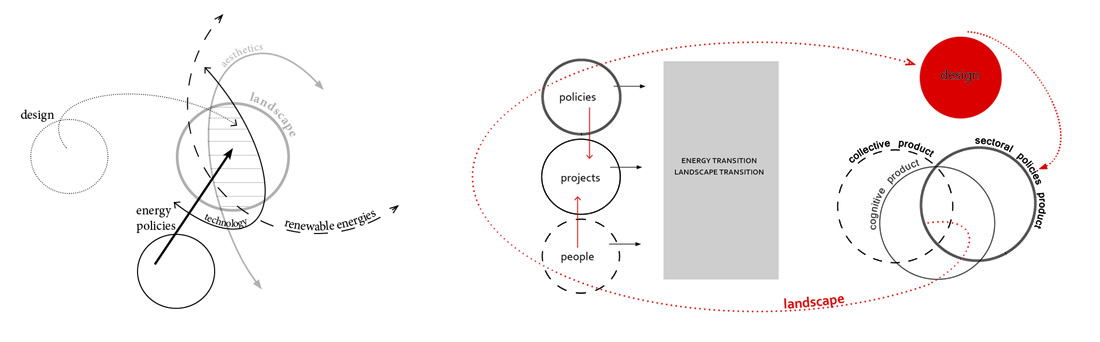
Both, landscape and renewable energy are powerful and controversial concepts in conceiving transformations in society and built environment. In order to investigate the relationship between landscape and renewable energy, this research project reflects about the link between landscape architecture and renewable energy policy in designing sustainable energy landscapes. Accordingly, the main research statements are that landscape architecture, as discipline, can contribute to the sustainable implementation of renewable energy technologies (De von Back, 2010; Stremke and Van den Dobbelsteen, 2013), and that design is the core of landscape architecture discipline (Njhuis & Bobbink, 2012; Koh, 2013). This research is performed by Silvia Minichino, Landscape Architects and PhD researcher from Florence University who has been visting the NRGlab at Wageningen University from January till July 2013. Read more
Shaping sustainable energy landscapes – A narrative approach: PhD study Renée de Waal (2010-2018)
This PhD research project studies (A) the niche for landscape architecture in energy transition, (B) design approaches adopted by landscape architects working on energy transition, and (C) if and how a narrative approach can help designing meaningful sustainable energy landscapes. For the last question, the entries for the 9th Eo Wijers regional design competition are used to derive common narratives that occur in planning and design of sustainable energy landscapes and to see how designers use these to convey meaning and expression. The research is performed by Renée de Waal, PhD researcher at the Landscape Architecture group at Wageningen University. Read more
De Waal, R.; Stremke, S. (2014) Energy transition: Missed opportunities and emerging challenges for landscape planning and designing, Sustainability, 6(7), 4386-4415, DOI: 10.3390/su6074386
De Waal, R.; Stremke, S.; Van Hoorn, A.; Duchhart, I.; Van den Brink, A.(2015). Incorporating renewable energy science in regional landscape design: Results from a competition in The Netherlands, Sustainability (Special Issue: Landscape and Sustainability) 7(5), 4806-4828, DOI: 10.3390/su7054806

Samsø Sustainability Assessment (2012-2013)
The basic idea behind the NDOMATES project is to develop “tools” to test the sustainability level of a society. The tools for (a) work energy accounting and (b) carbon modeling are developed to assist any person interested in evaluating the sustainability level of a particular territory. This is done in a manner that also allows pointing out the factors that quantitatively speaking are the major reasons for the low/high degree of sustainability of a territory. The project is run by Søren Nors Nielsen/Sven Erik Jørgensen from Copenhagen University and Søren Hermansen/Birgit Holmboe from the Samsø Energy Academy. Sven Stremke is member of the project reference group and contributes to the project from Wageningen and when visiting Denmark twice a year. The project is supported by the Villum Fund.
Jørgensen, Sven Erik (2012). Employing Exergy and Carbon Models to Determine the Sustainability of Alternative Energy Landscapes. In Sustainable Energy Landscapes: Designing, Planning and Development, edited by S.Stremke and A.van den Dobbelsteen. Boca Raton: Taylor & Francis.
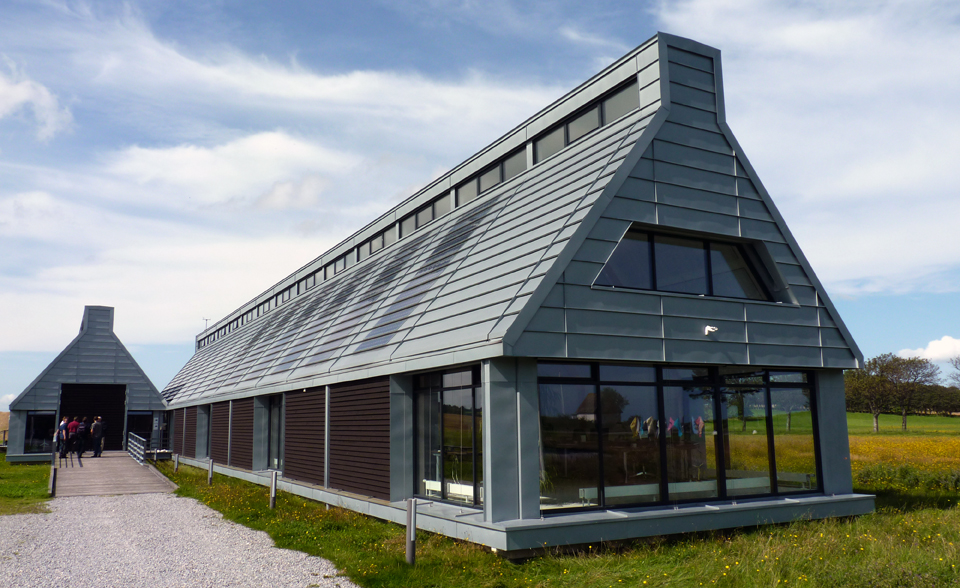 Figure: Photograph of the Samsø Energy Academy, the host of the NDOMATES research project
Eo Wijers Regional Design Competition: Plan Analysis (2012)
The Eo Wijers foundation (in Dutch: de Eo Wijers-stichting) is an independent network contributing to spatial quality of the Dutch landscape on the supra-local scale. The foundation supports private and public commissioners in concrete projects and aims to strengthen the role of design and designers in spatial processes. The Eo Wijers competition, organised every second/ third year, is the most prestigious competition for regional design in the Netherland. Each edition, the entries of the competition are analysed by a university or some other research institution. In the 9th edition (2011-2012), sustainable energy was one of the core themes and WUR was asked to perform the analysis. The WUR team consisted of Annet Kempenaar, Renée de Waal and Adri van den Brink. The research report can be accessed here (in Dutch).
De Waal, R.; Stremke, S.; Van Hoorn, A.; Duchhart, I.; Van den Brink, A. (2015). Incorporating renewable energy science in regional landscape design: Results from a competition in The Netherlands, Sustainability (Special Issue: Landscape and Sustainability) 7(5), 4806-4828, DOI: 10.3390/su7054806
Kempenaar, J.; De Waal, R.M.; Van den Brink, A. (2012). Nieuwe energie voor de Veenkoloniën, op zoek naar regionale comfortzones: Plananalyse, Deventer: Eo Wijerststichting, 51 p.
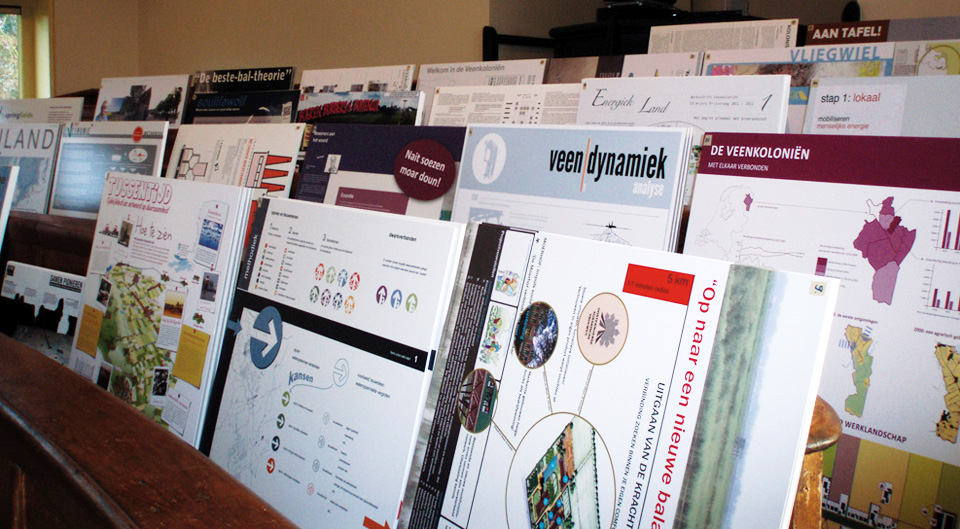 Figure: Array of posters submitted to the design competition during plan analysis in Wageningen
Designing Sustainable Energy Landscapes: PhD study Sven Stremke (2006-2010)
In 2005, the first contacts were established between SenterNovem (now Agency NL) and the chair group Landscape Architecture/Wageningen University. After a period of intensive discussion, the four-year SREX research project was granted by SenterNovem. SREX stands for Synergies between Regional Planning and Exergy. This project on the implications of energy transition to planning and design of the larger physical environment was conducted in close cooperation with the TU Delft, RU Groningen, the Hogeschool Zuyd and TNO. One initial part of the project – the study of energy-related concepts in ecology and thermodynamics – was conducted by Sven Stremke. This part of his PhD research resulted in the following scientific papers:
Stremke, S.; Koh, J. (2011). Integration of ecological and thermodynamic concepts in the design of sustainable energy landscapes. Landscape Journal, 30(2), 194-213.
Stremke, S.; Van den Dobbelsteen, A.; Koh, J. (2011). Exergy landscapes: Exploration of second-law thinking towards sustainable landscape design. International Journal of Exergy, 8(2), 148–174.
Stremke, S.; Koh, J. (2010). Ecological concepts and strategies with relevance to energy-conscious spatial planning and design. Environment and Planning B, 37(3), 518-532.
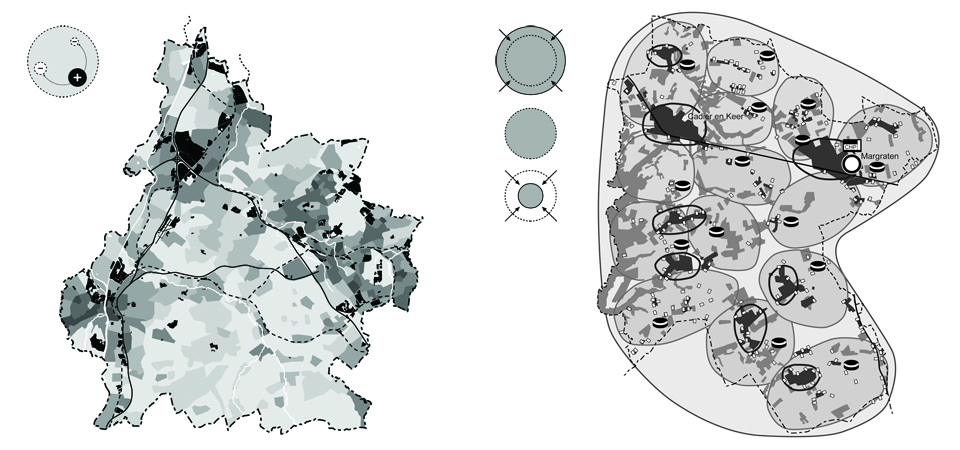 Figure: From descriptive concepts to design: Sources and sinks (left) and optimum system size (right)
